





International Network Meeting in Magdeburg on Brain Stimulation
On March 13 and 14, 2026, a joint network meeting and the 4th Workshop on Electroconvulsive Therapy (ECT) took place at Magdeburg University Hospital. The meeting was organized by the German Society for Psychiatry and Psychotherapy, Psychosomatics, and Neurology, the Working Group for Neuropsychopharmacology and Pharmacopsychiatry, and the German Society for Brain Stimulation in Psychiatry.
The University Clinic for Psychiatry and Psychotherapy Magdeburg, under the direction of Prof. Dr. med. Thomas Nickl-Jockschat, hosted this significant symposium in Magdeburg.
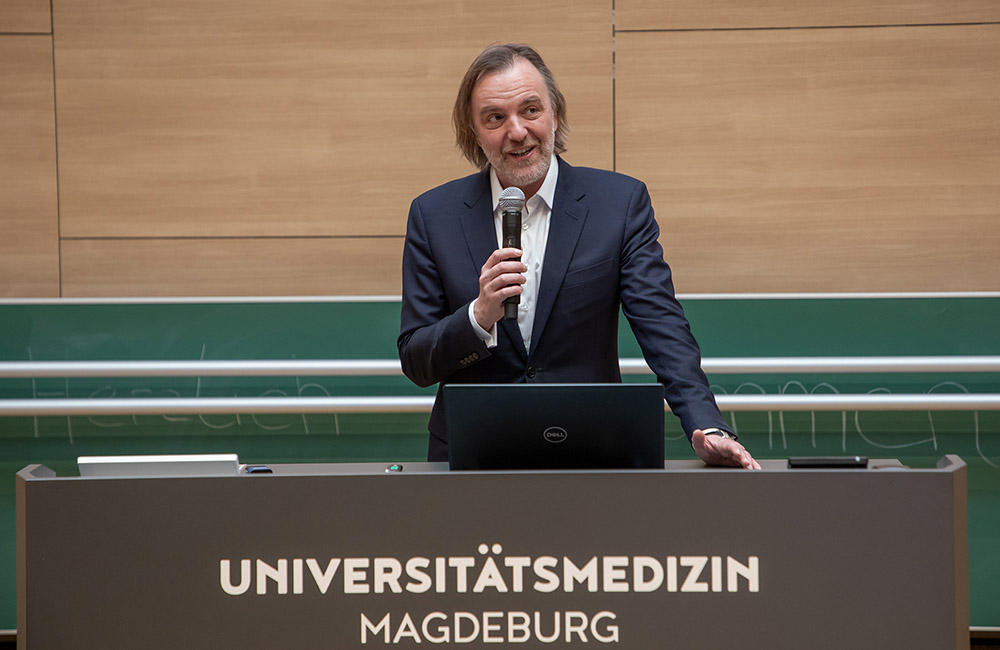
Photo: Prof. Thomas Nickl-Jockschat, Director of the University Clinic for Psychiatry and Psychotherapy, welcomes the guests. Photographer: Melitta Schubert/UMMD
The event brought together numerous colleagues from across Germany as well as international experts to discuss current developments and research findings in the field of electroconvulsive therapy (ECT) and related neuromodulatory procedures.
Prof. Nickl-Jockschat emphasized: “Despite significant progress in psychotherapy and pharmacology, these options are insufficient for some patients. At our network meeting in Magdeburg, we were able to discuss innovative therapeutic options in the field of neuromodulation with leading international experts.”
A particular highlight was the distinguished lineup of speakers, featuring international experts such as Leif Oltedal (University of Bergen, Head of the GEMRIC Consortium), Nicholas Trapp (Director, Interventional Psychiatry Program, University of Iowa), and Bogdan Draganski (Inselspital Bern), who provided fascinating insights into their current research and clinical approaches.
Another key focus was on modern brain stimulation techniques, which are becoming increasingly important in the treatment of psychiatric disorders. Discussions included advancements in ECT as well as non-invasive methods such as repetitive transcranial magnetic stimulation (rTMS). The focus was on questions regarding individualized treatment planning, the optimization of stimulation parameters, and the integration of imaging techniques with clinical treatment concepts.
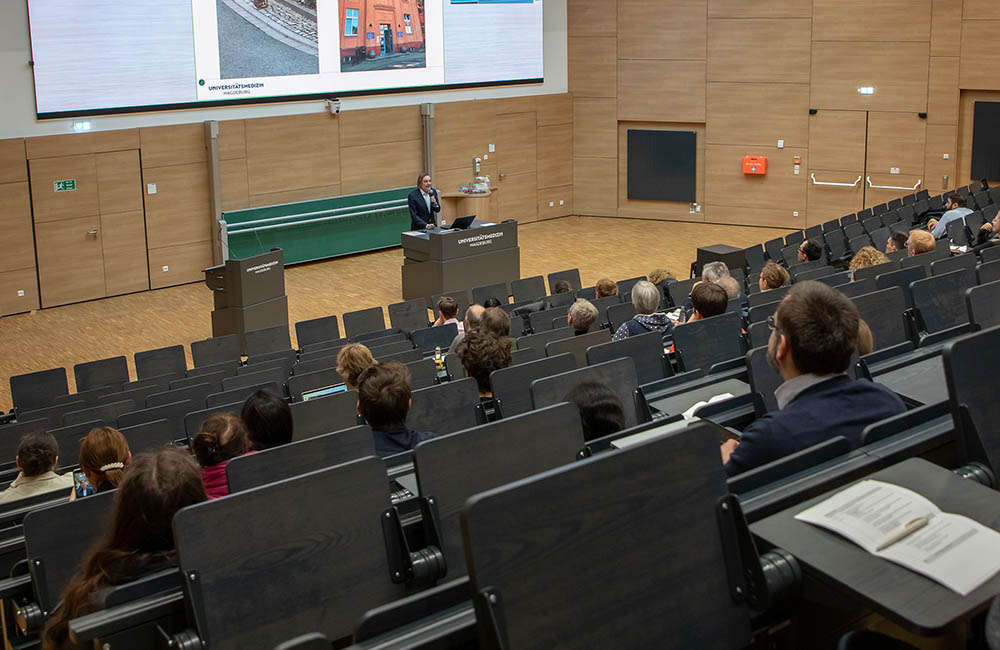
Photo: Scenes from the network meeting in the new lecture hall (Building 7) on the campus of Magdeburg University Medical Center. Photographer: Melitta Schubert/UMMD
Mental illnesses, such as depression, anxiety disorders, and schizophrenia, are currently treated primarily with medication and psychotherapy. Overall, treatment success is surprisingly good; however, there is still a need for further improvement in therapy, as not all patients respond sufficiently to treatment.
In addition to the scientific presentations, the network meeting offered a variety of opportunities for interdisciplinary exchange and for deepening existing collaborations. In particular, participants made extensive use of personal dialogue and highlighted it as a major added value of the event.
The meeting in Magdeburg once again underscored the importance of close collaboration between research and clinical practice in the field of modern psychiatry and brain stimulation, as well as the high significance and reputation of this location.