





Climate Emergency Symposium
Heat waves have long been more than just a weather issue: High temperatures can take a toll on health and pose additional challenges for emergency care. Experts discussed how to better identify these consequences and prepare the healthcare system for them at the KlimaNOT Symposium on August 27, 2026, at the Magdeburg Science Harbor. The event was hosted by the Institute for Public Health in Acute Medicine (IPHAM).
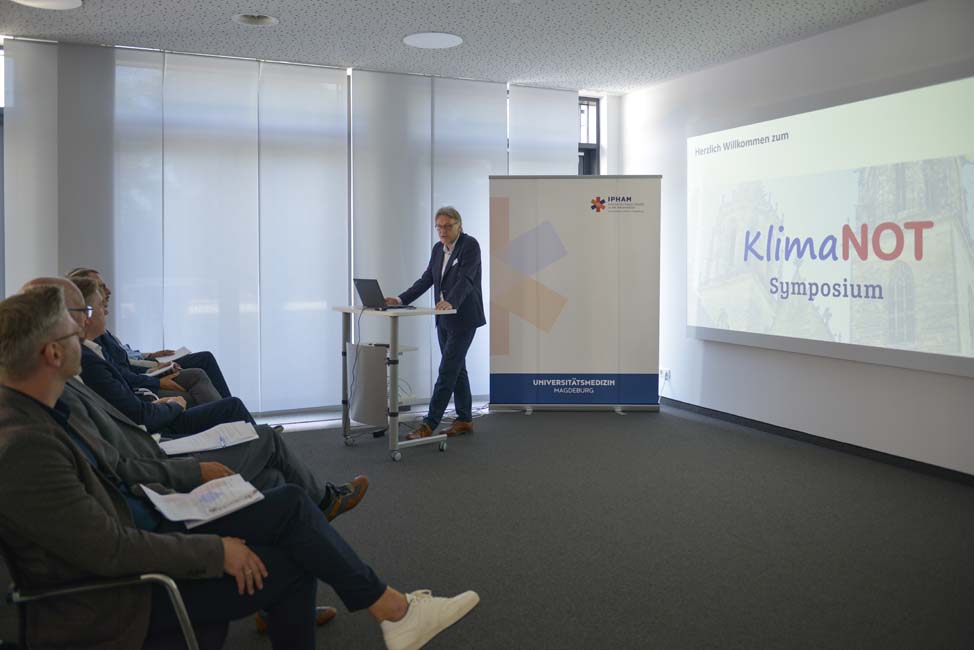
Prof. Dr. Felix Walcher, Director of the IPHAM, opened the event and introduced the key issues surrounding climate change, heat, and the future challenges for emergency and acute care. Representatives from state politics and academia—including State Secretary for Science Thomas Wünsch and Prof. Dr.-Ing. Jens Strackeljan, Rector of the Otto von Guericke University Magdeburg—were also in attendance and provided important impetus for the exchange between science, healthcare, and politics.
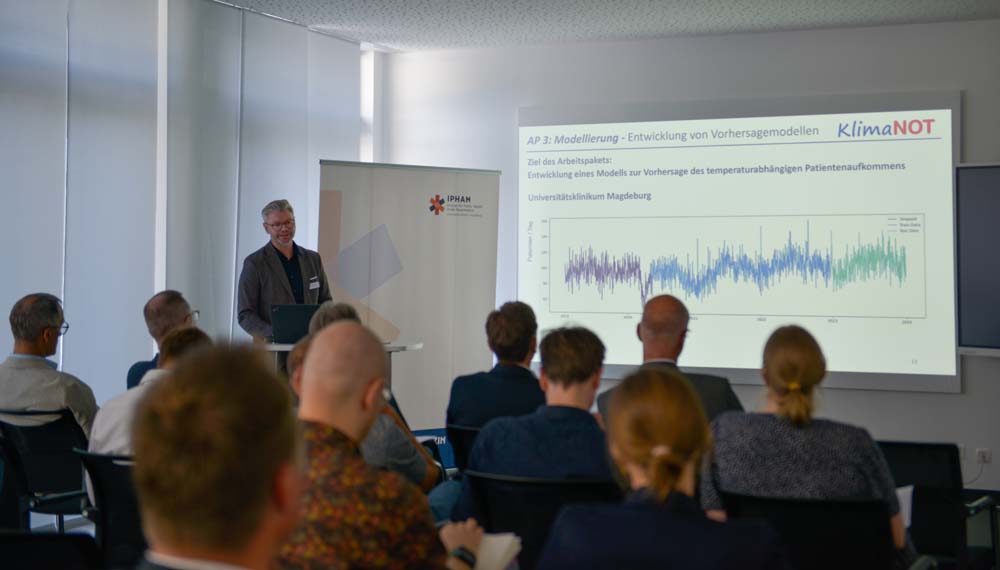
Dr. Kai Heimrath, project manager of KlimaNOT, then presented key findings from the research project. He demonstrated how high temperatures, in particular, affect the number of visits to emergency rooms and impact patient groups that are especially at risk. Together with experts from academia and the field, participants discussed how the healthcare system can better prepare for climate-related stresses in the future.
In addition to the findings of KlimaNOT, the focus was on new approaches to better capture the health consequences of heat using monitoring and machine learning. Other topics included the particular vulnerability of older adults, the effects of heat on mental health, and the importance of urban green spaces for health and protection against heat.
The symposium thus provided an important platform for combining scientific findings with practical perspectives and for further developing approaches to climate-resilient healthcare.