





From Harvard to Magdeburg: Multi-million-dollar grant for research into the causes of cerebral hemorrhages and dementia
Transatlantic Network of Excellence with a research group from Magdeburg University Hospital receives €8 million in funding to study an often-overlooked vascular disease
The Department of Neurology at Magdeburg University Hospital is becoming a founding member of the “Transatlantic Network of Excellence” to study cerebral amyloid angiopathy (CAA). The disease affects small blood vessels in the brain and is one of the most common causes of spontaneous cerebral hemorrhages in older adults. It also plays a significant role in the development of dementia, particularly Alzheimer’s disease. Together with other leading scientists from renowned institutions such as Harvard Medical School, Boston University, and other European and U.S. partners, the research group led by Prof. Dr. Stefanie Schreiber, acting director of the Department of Neurology at Magdeburg University Hospital, is receiving a grant from the Leducq Foundation for Cardiovascular Research totaling $9 million (approximately €8 million) over five years. The international research network will begin its work in early 2027.
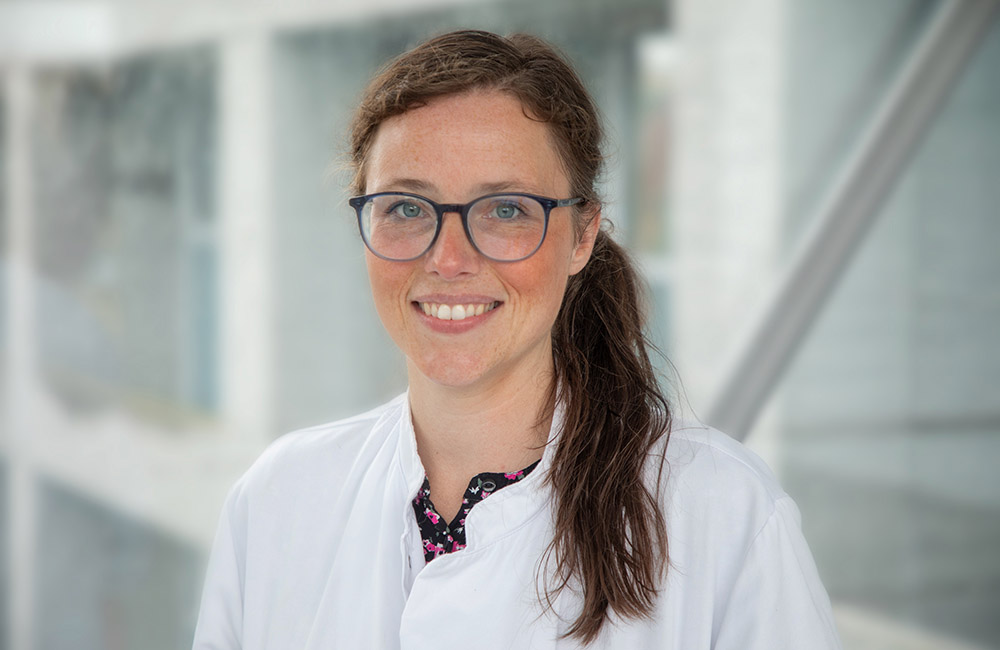
Photo: Prof. Schreiber, an internationally recognized expert on cerebral small-vessel disease, is one of the founding members of the new “Transatlantic Network of Excellence.” Photographer: Melitta Schubert/Magdeburg University Medical Center
When protein deposits damage the blood vessels in the brain
In cerebral amyloid angiopathy (CAA), proteins are deposited in the walls of small blood vessels in the brain. This makes the vessels more susceptible to damage and bleeding. The disease occurs primarily in older people. According to the researchers, CAA is found in more than half of all patients with cerebral hemorrhages. Corresponding changes can also be detected in a large proportion of people with Alzheimer’s disease.
Despite its great significance, the causes and biological processes of the disease are still only partially understood. This is precisely where the new research network comes in. The participating world-leading research groups aim to pool clinical data, brain imaging, and molecular studies from multiple countries to better understand the onset and progression of the disease.
“CAA is a common but still under-researched disease. Through close international collaboration, we can pool important data and expertise to better understand the causes and develop new options for diagnosis and treatment,” says Prof. Dr. Stefanie Schreiber. A native of Magdeburg, she has been researching cerebral small-vessel diseases for nearly two decades and built her scientific expertise during research stays at the universities of Southampton and Berkeley, among others. Today, she and her team care for patients with CAA and other cerebral small-vessel diseases from all over Germany in a specialized neurology outpatient clinic.
The goal: earlier diagnoses and better risk predictions
One focus of the network is the search for so-called biomarkers. These are measurable characteristics in the body that can provide clues to a disease. Such biomarkers could help detect CAA earlier and more accurately in the future.
In addition, the researchers aim to develop methods to better assess an individual’s risk of cerebral hemorrhage. In the long term, the results are intended to lay the groundwork for targeted treatment approaches. Currently, there is no therapy that directly addresses the causes of the disease.
International collaboration to address a pressing health issue
Seven leading research groups from Europe and the U.S. are collaborating within the network. The researchers point out that studying a complex disease like CAA presents particular challenges. For instance, large amounts of diverse data from international patient cohorts must be consolidated and analyzed. Furthermore, many of the disease’s biological mechanisms are not yet fully understood. Therefore, despite the new funding, it will take time before the findings can be translated into concrete diagnostic procedures or new therapies.
Nevertheless, the researchers anticipate significant progress in the prevention and care of people with cerebral hemorrhages and dementia. Furthermore, the project aims to support early-career researchers and further strengthen international collaboration in the field of neurodegenerative diseases. In 2029, the international participants will gather for a colloquium in Magdeburg.
Project Partners
- Prof. Charidimou, Boston University, USA (US Coordinator)
- Prof. Verbeek, Radboud University Medical Center, Netherlands (EU Coordinator)
- Prof. Greenberg, Harvard Medical School and Massachusetts General Hospital, USA
- Prof. Schreiber, Magdeburg University Medical Center, Department of Neurology, Magdeburg
- Prof. Nostrand, University of Rhode Island, USA
- Prof. Hernández Guillamon, Vall d'Hebron Research Institute, Spain
- Prof. Schrag, Vanderbilt University Medical Center, USA
Scientific Contact
Prof. Dr. Stefanie Schreiber, Acting Director of the Department of Neurology at Magdeburg University Hospital, stefanie.schreiber@med.ovgu.de