





Von Bauchschmerzen zur innovativen Zelltherapie
Team at Magdeburg University Medical Center achieves sustained therapeutic success in rare autoimmune disease
Severe abdominal pain more than 10 years ago marked the beginning of a patient's long history of illness. For years, he suffered from a rare autoimmune disease in which the immune system attacks healthy organs, leading to irreversible loss of organ function. An interdisciplinary team at Magdeburg University Medical Center has now embarked on a new course of treatment: CAR-T cell therapy has succeeded in bringing the disease under long-term control and restoring a large part of the patient's quality of life. The team reports on the case in the renowned Journal of Hepatology.
The patient had an IgG4-related disease. This is a very rare, chronic inflammatory systemic disease that can affect various organs. Put simply, the immune system mistakenly recognizes certain structures in the body as “foreign” and attacks them. This results in inflammation and scarring in the tissue, which can permanently impair organ function. In this case, the bile ducts, lungs, pancreas, and large abdominal vessels were among the organs affected.
For more than ten years, the patient was stabilized with conventional therapies by the team at the Department of Gastroenterology, Hepatology, and Infectious Diseases. Nevertheless, the disease continued to progress slowly.
A new approach: a “living drug”
In this difficult situation, the treatment team, together with Prof. Dimitrios Mougiakakos, Director of the Department of Hematology, Oncology, and Cell Therapy, and the patient, decided on an innovative, experimental approach: the use of CAR-T cell therapy. This is a type of “living drug.” The patient's own immune cells are removed and modified in the laboratory so that they can specifically recognize and eliminate disease-causing cells. Under the direction of Prof. Mougiakakos, several patients with difficult-to-treat autoimmune diseases have already been successfully treated with this highly specialized cell therapy in Magdeburg in recent years – attracting considerable attention both nationally and internationally.
One year after the therapy, the results are stable: the patient no longer has any active signs of inflammation and does not require long-term medication to suppress the immune system. His quality of life has improved significantly. He has even been able to take longer trips for the first time in years – something that seemed unthinkable for a long time.
State-of-the-art imaging was also an essential part of the treatment. Using special highly sensitive functional procedures, Prof. Dr. Michael C. Kreißl, Chief Physician of Nuclear Medicine at Magdeburg University Hospital, was able to objectively verify the regression of inflammatory activity. “The success of the therapy was clearly evident not only clinically but also in the imaging,” said Kreißl. “This demonstrates the high level of expertise at the Magdeburg site.”
Why this case is important
“Such a course of events is exceptional in this difficult-to-treat situation,” says Prof. Verena Keitel-Anselmino, Director of the Clinic for Gastroenterology, Hepatology, and Infectiology. “With conventional therapies, we would not have been able to achieve this extent and sustainability of disease control at that time. This work has the potential to fundamentally change the future treatment of such patients.”

To date, there has been only one other report from China on the use of CAR-T cells in IgG4-associated diseases. The case now published therefore provides important information, but does not replace larger clinical studies. The researchers emphasize that it is still unclear how many patients this therapy is effective for, what the risks are, and how long-lasting the effect is.
In addition, CAR-T cell therapies are complex and cost-intensive. They are currently used primarily for certain types of cancer. Further studies are needed to determine whether and for whom they will also be suitable for autoimmune diseases in the future.
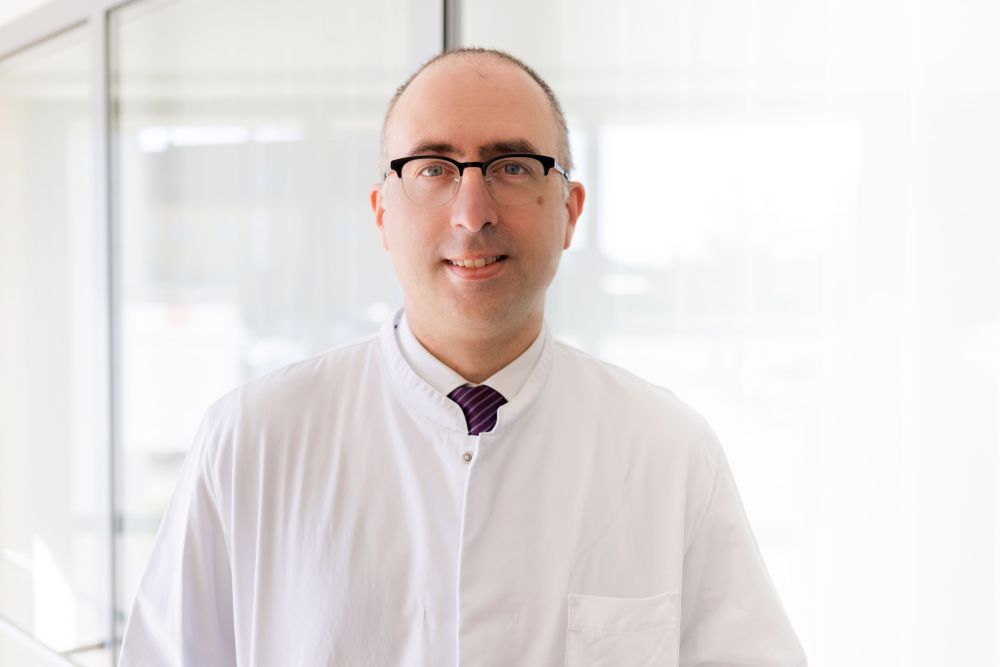
Prof. Mougiakakos summarizes: "This case shows what is possible when different disciplines work closely together. Doctors and researchers from hematology, oncology and cell therapy, gastroenterology, nuclear medicine, radiology, pathology, and pulmonology have pooled their knowledge. This underscores the strength of our location—especially in the context of the newly founded Magdeburg Center for Cell and Immunotherapies (MAZI), which I have the privilege of leading."
Original publication:
CAR T-cell therapy induces remission in multiorgan IgG4-related disease with hepatobiliary involvement; Journal of Hepatology; 2025 Dec 8; DOI: https://doi.org/10.1016/j.jhep.2025.11.027
Contacts:
For further information, a second opinion, or to make an appointment for one of our specialized consultations.
Prof. Dr. med. Verena Keitel-Anselmino
Email: verena.keitel-anselmino@med.ovgu.de
Tel.: +49 391 67 13421
Prof. Dimitrios Mougiakakos, MD
Email: dimitrios.mougiakakos@med.ovgu.de
Tel: +49 391 67 13266